Counterfeit or grey market? Why consumer brands need seller classification before enforcement
The strongest brand protection programs do not treat every seller the same. They classify first, then act.
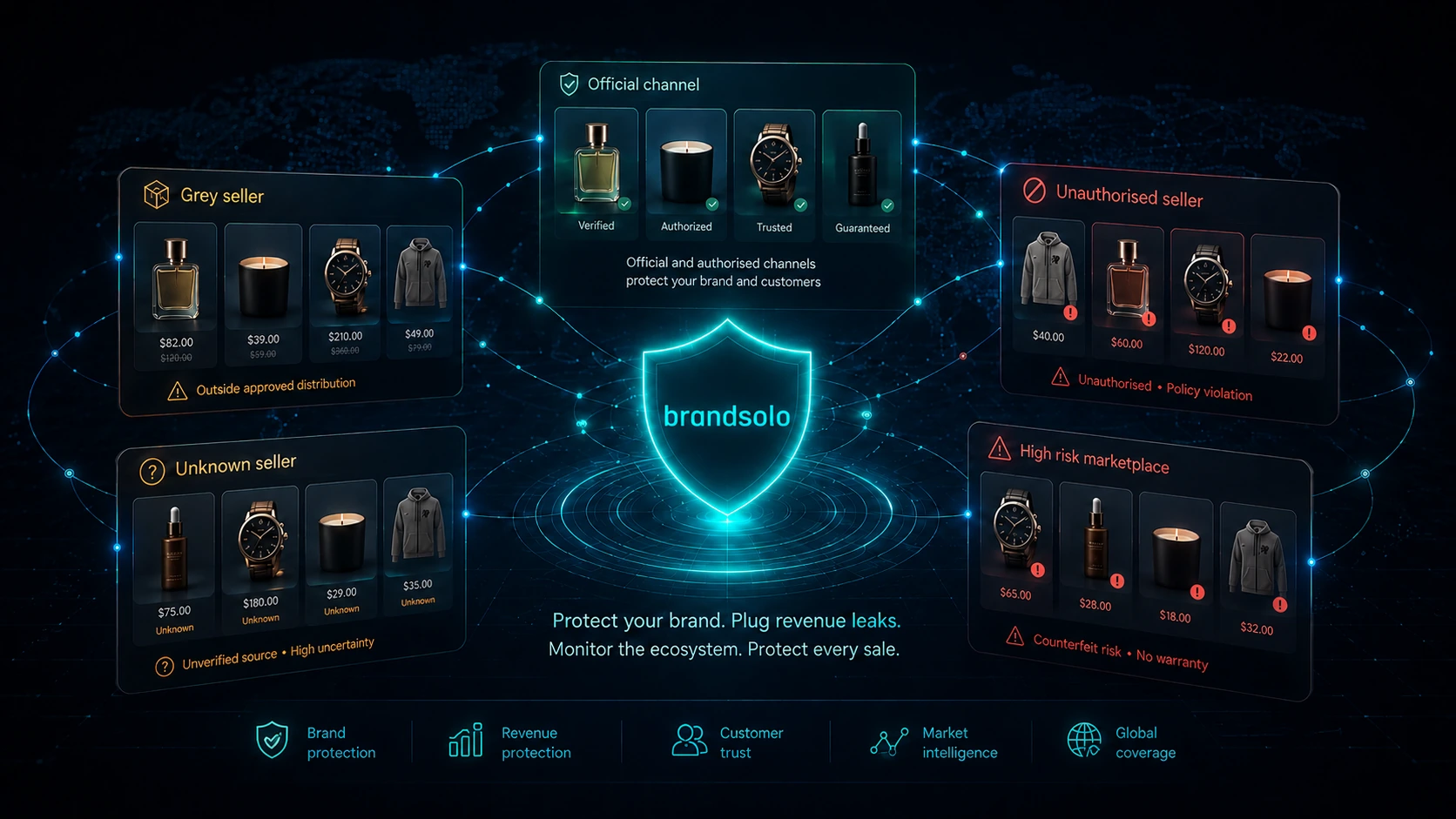
For consumer brands, marketplace enforcement often starts with a simple question: is this product fake?
That question matters, but it is not always enough.
A marketplace page can contain genuine products sold by authorised partners, genuine products sold by unknown sellers, grey market goods, unauthorised resellers, suspicious listings, copied product content, counterfeit products and scam stores pretending to be official.
If every listing is treated the same, the brand loses precision.
The strongest brand protection programs classify first, then act.
Why classification matters
Seller classification helps teams understand what type of problem they are dealing with before taking action.
An authorised seller may need to be whitelisted. A known partner may need commercial follow-up. An unknown seller may need monitoring and evidence collection. A grey seller may point to channel leakage. A counterfeit seller may require marketplace enforcement. A scam webshop may require domain, hosting or payment provider escalation.
These are different problems. They need different actions.
The main seller categories
Most consumer brands need visibility across a few practical categories.
Authorised sellers are approved partners or official channels.
Known partners are sellers the brand recognises, but who may still need monitoring based on territory, price or marketplace rules.
Unknown sellers are accounts the brand cannot immediately connect to an approved channel.
Grey sellers may offer genuine products outside the brand’s intended distribution structure.
Unauthorised resellers may be operating outside agreed commercial terms or marketplace rules.
Counterfeit sellers offer fake or infringing products.
Scam or impersonation stores pretend to be official, often using brand names, product images, copied content or misleading domain names.
Why blind enforcement is risky
Blind enforcement creates two problems.
First, brands may miss real threats because they are hidden among many similar listings.
Second, brands may act against sellers that should have been reviewed, monitored or whitelisted first.
For premium consumer brands, friendly fire is a real risk. An enforcement program should not disrupt authorised partners or approved marketplace activity.
That is why seller classification is not a slow legal exercise. It is operational discipline.
From seller data to action
Once sellers are classified, teams can decide what action is appropriate.
Some listings can be removed because they are counterfeit or misuse brand assets. Some can be escalated through marketplace brand protection programs. Some require commercial follow-up with distributors or retail partners. Some should be monitored as part of channel intelligence. Some sellers should be whitelisted to avoid unnecessary action.
This makes enforcement more precise and more credible.
What a good classification layer should include
A practical classification layer should include seller identity, seller ID, marketplace, country, product type, price, shipping origin, repeat behaviour, use of official images, suspected rights issues, known partner status and recommended action.
The outcome should be simple enough for legal, e-commerce and commercial teams to use.
How Brandsolo supports seller classification
Brandsolo helps brands move from raw marketplace findings to clear seller categories and action rules. Our Marketplace & Webshop Protection module detects listings across marketplaces and webshops, validates findings and supports enforcement where rights and rules allow it.
We classify seller types, whitelist authorised partners, identify repeat sellers and support enforcement where rights and rules allow it.
For scam stores and lookalike domains that fall outside marketplace scope, Domain Shield handles the domain, hosting and payment-provider routes.
This helps consumer brands avoid blind takedowns, reduce noise and focus on the listings and seller networks that matter most.